
Updated: October 25, 2026
When the video is about something nobody is supposed to know yet
A lot of video work in Miami involves information a company is not ready to share. A product launch filmed three months before the announcement. A rebrand that has not been revealed to employees. A hotel opening, a merger, a new restaurant concept, a celebrity partnership, a clinical program still waiting for approval. In each case, the production company and its crew will see, hear and hold material that would cause real damage if it leaked early.
That is why more clients now ask for a non-disclosure agreement before they share a brief. This guide explains what a video production NDA should cover, how confidentiality reaches the freelance crew who are not employees of the company you hired, what it does to the quote, and how to handle the question every video company will eventually ask: can we put this on our reel? It is written for marketing managers, producers and procurement teams buying video in Miami. It is practical guidance, not legal advice, so have your own counsel review the documents you sign.
What a video production NDA should actually cover
Many companies send their standard NDA, the one written for software vendors or consultants. It often misses the parts that matter on a shoot. A good confidentiality agreement for video work should address a few specific things.
- What counts as confidential. The brief, scripts, storyboards, product samples, locations, talent names, footage, edits and anything said on set. Footage is the big one, because it is the vendor's work product and your secret at the same time.
- One-way or mutual. Most video projects only need a one-way NDA protecting the client. A mutual NDA can make sense when the production company is sharing its own pricing models or creative concepts during a pitch.
- Who it binds. The company you sign with, its employees, and its freelancers and subcontractors. This is where many NDAs are weak, and we cover it below.
- How long it lasts. Some information is secret only until launch day. Some, such as unreleased financial data or a client list, stays secret for years. Separate the two so the vendor knows what they can talk about after the embargo.
- Storage and return. Where the footage lives, who can access it, and whether it is deleted or archived when the project ends.
- Portfolio and publicity. Whether the vendor can mention you as a client, show the finished video, or post behind-the-scenes content, and when.
Confidentiality usually sits alongside the main contract terms. If you are still putting the overall agreement together, our video production contract checklist and our article on the statement of work show where it fits.
The crew problem: most people on set are freelancers
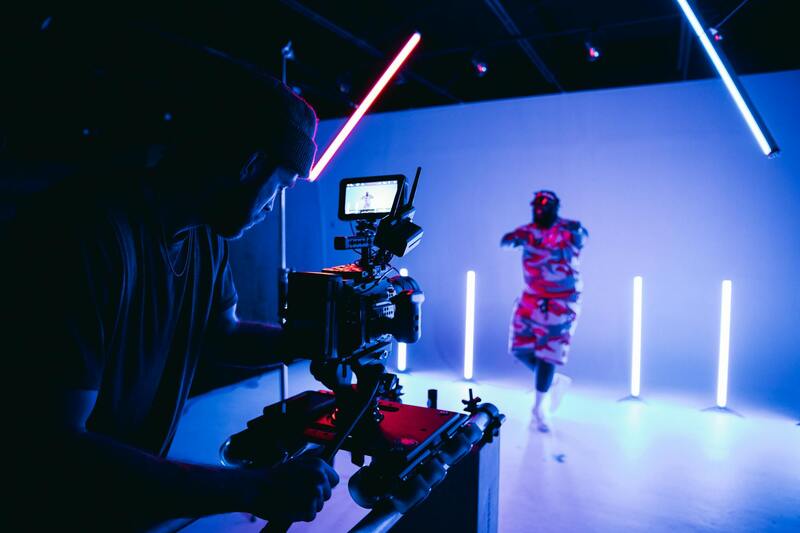
A Miami video company might have a handful of full-time staff, and bring in a director of photography, gaffer, grips, sound recordist, hair and makeup, a production assistant and an editor for your project. Your NDA with the company does not automatically bind those people. Ask how the vendor handles it.
The better answer is that every freelancer signs a crew agreement or deal memo with confidentiality terms that are at least as strict as yours, and that the vendor stays responsible if one of them breaks it. For sensitive projects, some clients ask to see the crew list in advance and require individual NDAs from everyone who will be in the room. That is reasonable, and a professional company will not be offended by the request. It does take time, so ask for it when you award the job, not the night before the shoot.
Phones and social media on set
Most production leaks start with something ordinary: a phone photo posted with good intentions, a crew member's story with your product in the background, or talent sharing a selfie from the set. If secrecy matters, put these rules in writing:
- No personal photos or video on set, or only in designated areas.
- No posting about the project, the location or the talent until a specific date.
- A closed set, with a sign-in sheet and no unlisted visitors.
- Product samples kept in a locked case or room between takes.
Footage security after the shoot
Once the camera cards are full, your secret lives on drives. Ask practical questions. Where will the footage be stored during editing? Is it on the company's own server, a cloud service, or an editor's laptop at home? Are drives encrypted? How are review links shared, and can they be password-protected and watermarked? Who can download the files?
For most commercial work, a reputable company already uses password-protected review links and keeps project files on its own systems. For a high-risk launch, you may want stricter controls: no work on personal devices, watermarked review copies, and a short list of named people with access. When the project ends, decide whether you want the vendor to archive the footage for future edits or delete it and confirm in writing. Our article on who owns the video you paid for covers the ownership side of that decision.
Can the vendor put your video on their reel?
Production companies win work by showing work. Most standard video contracts give the vendor the right to use the finished piece in its portfolio, on its website and in pitches. Many clients are happy with that once the video is public. Problems come when nobody discussed it.
| Option | What it means | Typical use |
|---|---|---|
| Full portfolio rights | Vendor can show the final video and name you as a client | Public marketing videos |
| After the embargo | Same rights, starting on a set date | Launches, openings, announcements |
| Private showing only | Vendor can show it in pitch meetings, not online | Internal or semi-confidential work |
| No portfolio use | Vendor cannot show or mention the project | Investor, legal, HR or highly sensitive content |
Behind-the-scenes photos and case studies are worth separate permission. A clip of your CEO laughing between takes may be charming to the crew and a problem for your communications team.
What confidentiality does to the quote
A standard NDA usually costs nothing extra. The vendor reads it, signs it and works as normal. Stricter requirements can add real costs, and it is better to discuss them before you compare quotes than after.
- A closed or private studio instead of a public location.
- Extra security staff or a dedicated set coordinator managing access.
- Encrypted drives, secure cloud storage or on-premise editing at your office.
- Time for legal review of your NDA, and for collecting individual crew NDAs.
- A reduced portfolio right, which some companies price in because it removes marketing value for them.
None of these should be surprises. A good vendor will tell you which measures make sense for your level of risk and which ones are overkill. A brief that explains why the project is confidential helps them suggest the right level. Our guide to writing a creative brief covers what else to include.
How Miami Video Company handles confidential projects
We sign client NDAs before we receive a brief, and we review them for the details that matter in production: crew coverage, footage storage, embargo dates and portfolio rights. Every freelancer we hire works under a crew agreement with confidentiality terms, and for sensitive work we share the crew list in advance and collect individual NDAs. On set, we can run a closed set with phone rules, and in post, we use password-protected and watermarked review links with access limited to named people.
If you are planning a launch, a rebrand or any project that needs to stay quiet until a certain date, tell us about it in general terms, and we will send our standard NDA or review yours before we talk details. You can also read more about how we work.